Symphytum Officinale: Comfrey Or Knitbone
Hello everyone. I’m Dr. Imran Ali. And welcome back to the homeopathy materia medica series. Today, I’ll be discussing the homeopathic remedy Symphytum Officinale.
Herbal Background And Botanical Notes
In the field of herbal medicine, Symphytum is known as comfrey [1] or knitbone, where it is used with great success in the treatment of bone fractures. Symphytum is a plant that belongs to the Boraginaceae family. It’s also worth noting that Symphytum or knitbone can be easily confused with boneset, which is the common name of the plant used to make the homeopathic remedy Eupatorium perfoliatum.
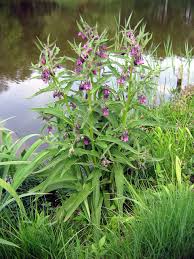
Symphytum Source Plant Camfrey Knitbone
Herbal comfrey’s reputation for bone mending also applies to homeopathic Symphytum. Perhaps even more so. I think it’s fair to say that homeopathic Symphytum works more rapidly and acts more deeply than its herbal counterpart.

Central Theme Of The Remedy Symphytum
I thought it would be useful to begin with a few passages from Frans Vermeulen’s Synoptic Reference One, where he notes that we can summarize Symphytum’s remarkable ability to heal broken bones as an ability to join together what has come apart.
Therefore, our theme for this remedy is going to be joining back together what has come apart.
Vermeulen states that the plant was named after its reputation to heal broken bones, being derived from the Greek word symphyo, meaning to unite. The root possesses such generative power that, when cut into pieces, each piece will produce a new plant, even those without an attached growth bud.
It turns out that comfrey root contains allantoin. And here Vermeulen quotes herbalist Simon Mills:
“Much of the healing effect of comfrey is known to be due to the effect of allantoin. This promotes the constructive activity of the fibroblasts in producing connective tissue and their near relatives, chondroblasts and osteoblasts.”
Vermeulen then quotes from Susan Fisher Rizzi’s book Medicine Of The Earth, which is the source from which we derive some Symphytum theme:
“The leaves are fused to the stem running down alongside it as if they could not let go“.
This was a sign to the old botanists of comfrey’s great determination. A gesture expressing its cohesive power to the human body. This means that comfrey can join back together what has come apart. And indeed, comfrey has long been used with great success as a remedy for broken bones and tissue damage.
Scope Of Action: Symphytum is Exclusively an Injury Remedy
All right, so with all that said, now let’s translate this scientific breakdown and these botanical metaphors into everyday practice. Now, unlike most of the remedies that I’ve covered so far, Symphytum has a comparatively narrow scope of action. In fact, Symphytum is almost exclusively an injury remedy.
It’s used for injuries to:
- Periosteum,
- Bone,
- Cartilage,
- Ligaments,
- Tendons,
- Joints,
- Eye.
You might ask why the eye is included in this list. Well, the answer is that together they constitute some of the strongest or hardest tissues of the body.
Symphytum Heals Broken Bone
Symphytum is most famously known for its ability to heal broken bones. It’s used to repair bones that are slow to heal or that simply refuse to heal.
It’s a remedy for nonunion of fractures.
It’s also used to treat pain associated with these same body parts.
Symphytum is Remedy of Both Acute and Chronic Injury Pains
It can be used for both the pain of an acute injury and chronic pain that persists long after an injury. If it’s chronic pain from old injuries or wounds that have long since healed, Symphytum is primarily a remedy for blunt trauma to hard body parts.
Example Use: Bone Bruising From Banging into a Hard Surface
A perfect example of this would be a bone bruise resulting from banging the lower leg into a hard surface like a coffee table. The shin bone or tibia is prone to injury because it’s one of the most exposed bones of the human body. The tibia itself is bone, and like most bones, its outer surface is composed of periosteum.
Symphytum is for Bone Bruises & Periosteum Injury
Periosteum is a dense fibrous connective tissue sheath that wraps around most bones. It contains blood vessels, nerves, and osteoblasts that assist in the formation of new bone. Symphytum is the main remedy for bone bruises and for injuries to the periosteum.
Long-Persisting Pain Due to Blunt Injury
Symphytum also fits excessive pain resulting from a blunt injury to a hard part and pain that persists long after such injuries have healed.
Symphytum For Skull Fractures and Head Injuries
It can be a remedy for skull fractures and head injuries.
- We think of Arnica for damage to soft tissues resulting from a head injury.
- We think of remedies like Hypericum and Natrum sulphuricum for injuries to the brain and nervous system.
- And we use Symphytum for injury to the bone and periosteum of the skull itself.
Tailbone Injury & Hip Fracture
We apply the same logic, for example, to a tailbone injury where we give Arnica for injury to the soft tissues, Hypericum for nerve damage, and Symphytum for bruising, pain, and injury to the sacrum and or coccygeal bone itself. Again, the same thinking would apply to a hip fracture.
Precautions Before Using Symphytum For Bone Fractures
By the way, it should go without saying, but I’ll say it anyway. It’s very important to make sure that the fractured bones involved in any situation are properly set before giving Symphytum. Given the remarkable bone healing power of this remedy, we don’t want a fracture to fuse in an unnatural way before the bone or bones have been properly aligned.
Symphytum For Back Injuries, Vertebrae Injuries, Infections, Decay
Now we also think of Symphytum for back injuries, especially when an injury involves one or more of the vertebrae of the spine.
Decay or Destruction of Vertebral Bone
It fits conditions that involve decay or destruction of the vertebral bone. This can occur in Pott’s disease, which is vertebral decay associated with tuberculosis of the spine.
Bone Destruction Due to Infection
In fact, we think of Symphytum when there is bone destruction resulting from any kind of infection. It may be indicated in cases of osteomyelitis, but it’s even more specific to cases of periostitis. This is when there’s inflammation or infection of the periosteum, especially when the infection occurs following an injury or wound.
Bone Destruction Due to Osteoporosis [2]
Vertebral decay can also occur in cases of osteoporosis, thus rendering the spine susceptible to fracturing.
Clinical Case Example of Symphytum For Back Pain
I once saw an older woman who had visited the emergency room complaining of back pain. X-rays revealed that she had multiple compression fractures of the spine, including older fractures in the lumbar region and newer ones in the thoracic spine. Since there was no history of trauma, this was most likely due to osteoporosis.
She was in a great deal of pain. She was hospitalized for a week, administered morphine for the pain, and then spent two more weeks in a rehab facility. After that, after discharge, she came to see me. She was still in a lot of pain.
Her description of her situation in life and her description of the pain were both very illuminating. It’s like someone is stepping on me, and I’m letting everyone do it. I feel guilty about accepting help, like I’m imposing on others, she said. For now, I’ll finish the story, and we’ll revisit these quotes later on when I get to the Symphytum mentals.
Prescribed Sympytum 6C
I prescribed Symphytum 6C to be taken in repeated doses. Three weeks later, she reported having less pain, and follow-up X-rays showed that the fractures were healing. I then instructed her to continue taking the doses but less frequently.
Compression Fractures Were Almost Healed
Five weeks after that, she said, my back feels much better. The neurosurgeon has discharged me. She had avoided surgery, and the compression fractures had almost completely healed.
Other Indications of Symphytum
As noted earlier, in addition to bone and periosteum, Symphytum can also be indicated for:
- Cartilage injuries
- Ligament injuries
- Tendon injuries
- Joint injuries.
- Strains or sprains caused by lifting
- Tennis or golf elbow
Injuries to Almost All Joints
It can fit injuries to almost any joint, for that matter, including:
- Ankle Injuries
- Knee Injuries
- Shoulder injuries
- Back injuries resulting from overexertion and straining
Broken Cranial Cruciate Ligament Case of a German Shepherd
Several years ago, our aging pet German Shepherd began to limp. The veterinarian told us that Fang had torn her cranial cruciate ligament, which is the equivalent of the ACL in humans. When we were told that it would require surgery to repair, we told the vet that we would think about it, went home, and promptly administered a few doses of Symphytum.
Within a few days, Fang ceased to limp, and she never had trouble with that knee again.
Additional Uses of Symphytum
Now, some additional conditions that may call for Symphytum include:
Bony Lumps or Nodules
bony lumps or nodules that develop after an injury.
Phantom Limb Pain
Phantom limb pain after amputation of a limb or digit.
Tooth Socket Pain
Pain and inflammation of a tooth socket after extraction.
Abscesses in Bone or Muscles
Abscesses that develop in bone or muscle, especially abscesses in the jaw, in a dental socket, or in the psoas muscle, which is the muscle that connects the lumbar spine to the leg.
Gunshot Wounds
Symphytum may be indicated for gunshot wounds.
After a Bone Marrow Biopsy
It can be helpful after a bone marrow biopsy, which is a procedure that involves the insertion of a needle deep into the hipbone in order to extract a sample of bone marrow.
Bone Cancer
And lastly, we think of Symphytum in cases of bone cancer, especially cancer of the jawbone.
Use of Symphytum in Eye Injuries
Now, recall how I said that Symphytum can also be used for the eye.
Blunt Trauma to Eyeball & Injury to Bony Eye Socket
It fits both blunt trauma to the eyeball and injuries to the bony socket around the eye. So we think of Symphytum and a few other remedies in the event of a black eye.
Other Remedies For Eye Injuries
Arnica Montana
We give Arnica for general trauma and injury to the soft tissues.
Ledum Pal
We give Ledum when the pain is ameliorated from a cold.
Hypericum
We give Hypericum for eye injuries because the eye is an extension of the nervous system.
Symphytum
And we give Symphytum for blunt trauma to the eyeball and eye socket.
Internal Bleeding From Eye Injury
We also consider Symphytum when there’s internal bleeding from an eye injury.
Spasms of Eyelids After Injury
It also fits spasms of the eyelids after injury.
Cataract After Injury
It even fits the development of a cataract after an eye injury. Think about the powerful healing impulse of comfrey and how it might generate a cataract in order to protect the eye after an injury to the surface of the eyeball.
Clinical Case Example of Bubble Under Corneal Surface of Eye
I once saw a patient who had taken a blow to the eye. There was a great deal of pain in the eyeball itself. And when I examined it, I discovered a small bubble that appeared to be just under the corneal surface of the eye.
It looked just like the air bubble in a level. You know, the tool used to measure whether something is straight or level. Within minutes after taking a couple of quick doses of Symphytum, the pain resolved rapidly, and the bubble was gone.
Important Repertory Rubrics Covering Symphytum
Now, just a sampling of repertory rubrics that list Symphytum in the third or fourth degree includes the following:
- Ailments from skull fractures.
- Injuries to the orbital bones of the eye.
- Cataract after eye injury. [3]
- Eyeball injuries.
- Eye pain from injuries.
- Blindness after eye injury.
- Abscess of the jawbone.
- Cancer of the jawbone.
- Abscesses in the sockets of the teeth.
- Decay of the vertebrae of the spine.
- Injuries to the spinal vertebrae.
- Inflammation of bones.
- Inflammation of the periosteum.
- Cartilage injuries.
- Slow repair of bone fractures.
- Injuries to the periosteum.
- Gunshot wounds.
- And old wounds that are still painful.
General Symptoms of Symphytum
All right. Now, let’s talk about generals, modalities, and mentals. Okay. Now, there are only a few Symphytum generals and modalities worth noting.
Injury to Hard, Tough Tissues of the Body
Symphytum is a remedy for injuries to hard, tough tissues of the body. This is especially true of the periosteum, which is the tough protective sheath around many bones.
Types of Symphytum Pains
Symphytum pains tend to be sore, sticking, stitching, and prickling.
2 Important Symphytum Sensations
Two prominent Symphytum sensations are:
- As if a bone is broken
- As if a joint is dislocated.
Local Coldness of the Affected Part
And sometimes we see general coldness or local coldness of the skin or of the injured part.
Modalities of Symphytum
The few modalities worth mentioning are:
Worse From Injuries
An aggravation from injuries and from blows.
Worse From Touch or Pressure and Motion
There’s an aggravation from touch or pressure and an aggravation from motion.
Back Pain Worse By Sexual Excess
The literature talks about backaches and lumbar pain aggravated by sexual excesses.
Pain Better By Warmth
And lastly, sometimes symptoms can be ameliorated by warmth and by gentle motion.
Mental Symptoms of Symphytum Officinalis
I wanted to mention that there are very few Symphytum mentals to speak of. My computer repertory lists a total of eight Symphytum mental symptoms. One of which is a:
- Mental aggravation from being touched.
However, in Frans Vermeulen’s Prisma Reference, he lists the following mental symptoms:
Ailments from setbacks or from suffering misfortune.
- A desire for stability
- Obstinacy in the execution of plans
- Delusion that he is about to be injured
- Delusion that the arms or legs do not belong to her
Add to this mix the statements noted earlier made by my patient with the back pain related to compression fractures. It’s like:
Someone is stepping on me, and I’m letting everyone do it. I feel guilty about accepting help, as if I’m imposing on others.
Now consider for a moment all of these mental symptoms in the context of a remedy that has a tenacious tendency to heal broken bones and whose theme is joining back together what has come apart. One could say that these mental symptoms paint a picture of a person suffering from adversity who, without the help of others, has stubbornly decided to take matters into his own hands to set things right again.
The adversity could be an arm or a leg that has become separated from the body, as in the case of an amputation. Or it could be a feeling that someone is stepping on me so much so that my vertebrae are cracking. Or it could just be a broken bone.
Guilty Feeling About Accepting Help
And since the person feels guilty about accepting help, but they have a need for stability, they therefore feel compelled to solve the problem on their own in order to put their life back together again. I don’t know. I’m just speculating here.
It’s worth contemplating this idea, given that it seems to make sense in terms of the overall pattern of the remedy and picture.
Remedy Relationships of Symphytum
No True Complementary Remedies of Symphytum
All right. Now, let’s finish up with remedy relationships. Okay. Now, although the literature doesn’t mention any true complements to Symphytum, there are still several remedies that we want to compare to Symphytum.
Arnica Montana
Beginning with Arnica, which can justifiably be prescribed in almost all cases of physical trauma, including broken bones, bruised bones, and black eyes, all of which are aggravated by touch.
Calcarea Phosphoricum
Calcarea phosphorica is the other main remedy for slow repair of fractured or broken bones, and it also fits neck, back, and spinal injuries.
Hypericum
Hypericum Perforatum is similarly indicated for neck, back, and spinal injuries in addition to head injuries and eye injuries. It’s also a main remedy for phantom pains after amputation.
Hecla Lava
Hecla lava is another remedy whose scope is almost exclusively focused on bone and periosteum. It fits bone injuries, bone abscesses, bone decay, and most specifically cancer of the jawbone.
Ledum Pal
Ledum fits injuries to the bone and periosteum, inflammation of the bone and periosteum, and gunshot wounds. Symptoms are worse from touch, but the main difference is that Ledum symptoms are ameliorated by cold.
Calendula
Calendula is primarily for open wounds and wounds that heal slowly. It can also be indicated for bone fractures and bone abscesses.
Silicea
Silicea fits a wide variety of bone, joint, and ligament problems. It also fits cataracts, eye injuries, abscesses of the teeth and jawbone, spinal injuries, vertebral decay, and slow repair of bone fractures.
Staphysagria
Staphysagria can fit eye injuries, inflammation of bone and periosteum, bone and muscle abscesses, bone fractures, and a general aggravation from touch.
Bryonia Alba
Bryonia Alba is another remedy for bone pains, bone injuries, inflammation of the bone, and inflammation of the periosteum. But the great defining feature of Bryonia is an aggravation from any kind of motion.
Rhus Tox
And lastly, Rhus toxicodendron also fits a wide variety of bone and joint problems. But the keynote feature of Rhus tox is its amelioration from motion.
Get Online Homeopathic Consultation
Submit your detailed case from anywhere in the world. Receive personalized homeopathic treatment based on classical principles. Start your healing journey today with professional guidance and care.
Glossary
Allantoin
Allantoin ((C_{4}H_{6}N_{4}O_{3})) is a soothing, hydrating skincare ingredient that moisturizes, protects, heals, gently exfoliates, reduces inflammation, and is widely used in lotions, creams, and OTC products.
Periosteum
The periosteum is a dense, vascular connective tissue layer covering bones except at joint surfaces.
Pott’s Disease
Pott’s disease (spinal tuberculosis) is TB of the spine causing vertebral destruction, chronic back pain, fever, weight loss, and possible paralysis; diagnosed by MRI/biopsy and treated with anti-TB drugs ± surgery.
Shin Bone/Tibia
The tibia (shinbone) is the larger, stronger lower-leg bone on the inner side. It bears body weight and runs from the knee to the ankle, enabling movement and stability.
Osteoporosis
Osteoporosis is a common bone disease that makes bones weak, porous, and easy to break. It happens when bone loss exceeds bone formation and often shows no symptoms until a fracture occurs. Risk factors include aging, menopause, smoking, and low calcium intake.
Cataract
A cataract is an age-related clouding of the eye’s natural lens that causes painless, gradual vision loss. Early signs include blurry or dull vision, night glare, and yellowed colors. It results from lens protein breakdown due to aging, injury, or diabetes and is treated with surgery.
References
- Wikipedia – Comfrey (Knitbone Plant)
- National Institute of Arthritis and Musculoskeletal and Skin Diseases (NIAMS) – Osteoporosis
- National Eye Institute – Cataracts

Homeopathic Dr. Imran Ali, DHMS, BHMS (Gold Medalist, University of Peshawar), RHMP, is a qualified homeopathic physician with over 10 years of clinical experience. He is registered with NCH (Reg. No. 170600) and focuses on safe, individualized, and holistic homeopathic care. Author of the Kindle book “Homeopathy For Infants & Kids – Curing 165 Most Common Issues” – available on Amazon.